
Some links in this article are affiliate links. As an Amazon Associate, Knots & Naps earns from qualifying purchases, at no extra cost to you. This never changes what we recommend. How this site works.
Traveling with a baby or toddler under two on a cruise ship is a different trip than traveling with a preschooler. There is a different set of things you can do, things you cannot do yet, and logistics that need more planning than a lot of casual advice suggests. Here is what the details actually are, from embarkation day onward.
Pricing: Kids Under 3 Generally Sail Free on Most Sailings
On most Disney Cruise Line sailings, children under 3 do not pay cruise fare; they sail at what is categorized as a complimentary rate. You will still pay government taxes and fees for them, and the stateroom cost does not change based on how many small people are sharing it, but you are not buying a full fare for a baby or young toddler.
This is one of the better-kept practical advantages of cruising with very young kids. Sailing while they are under 3 means you are not paying a full per-person rate for someone whose primary expenses are diapers and snacks.
That said: DCL pricing policies can and do change, and the terms around “free” sailings have nuances specific to sailings, fare categories, and restrictions. Always verify the current pricing structure directly with Disney Cruise Line or your travel agent before you book.
What Under-2s Can Actually Do
More than most first-time cruisers expect.
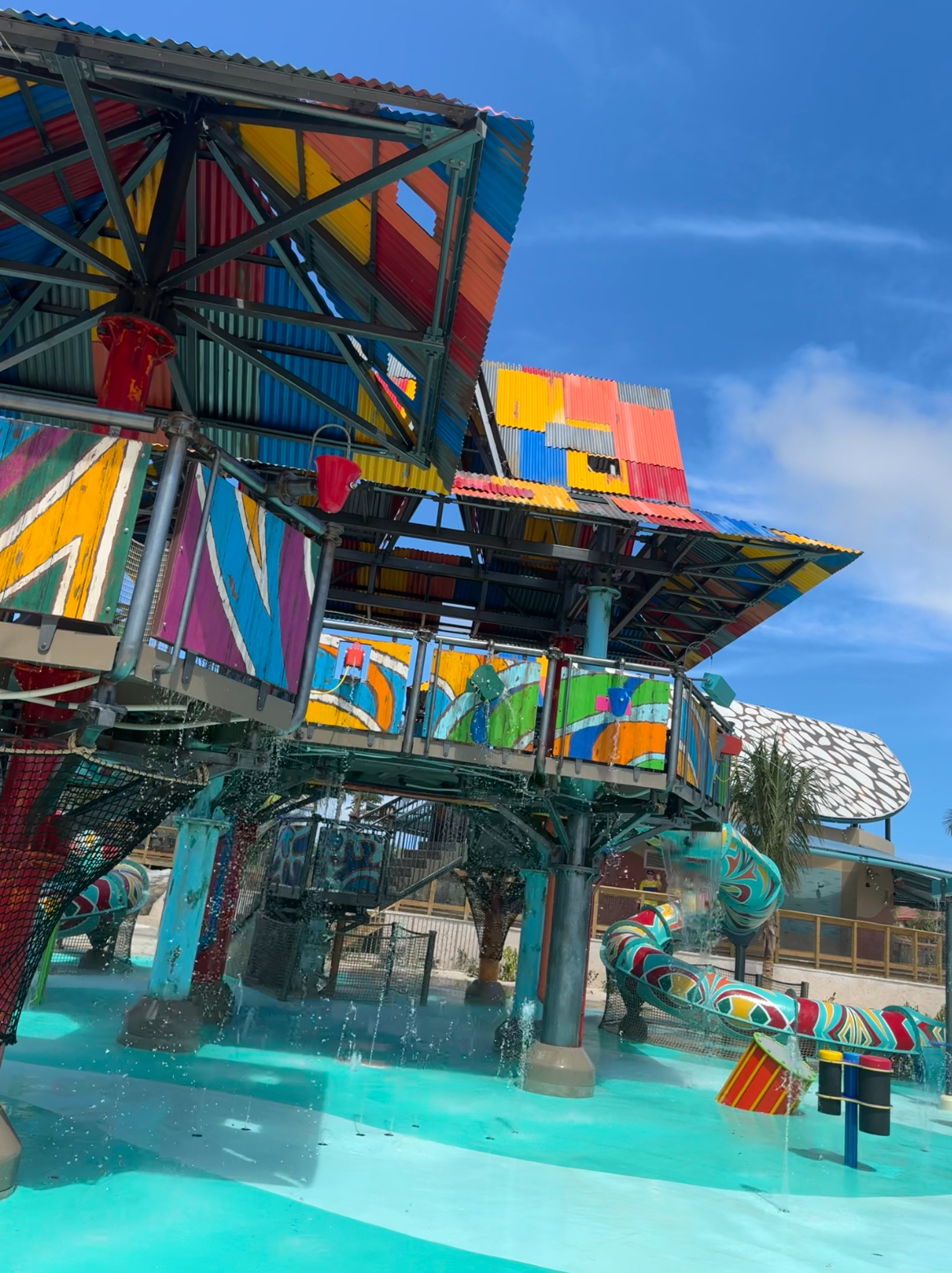
Nemo’s Reef splash pad. This is the toddler water play area on the Fantasy, with equivalent splash zones on other ships: low water features, shallow splash areas, nothing overwhelming. It is specifically designed for toddler-aged kids and is one of the more reliable ways to burn energy on a sea day.
The nursery. Disney Cruise Line runs a nursery called “It’s a Small World” for kids 6 months through 3 years on most sailings (1 to 3 years on Transatlantic, Hawaiian, and Panama Canal itineraries). It is a staffed, supervised childcare space where trained cast members watch your child for an hourly fee. Reservations are recommended and fill up, so booking as early as your reservation allows is worth doing. Our full nursery guide breaks down the exact cost, the booking windows by Castaway Club tier, and what to pack.
Character meets. Every character meet on the ship is open to an under-2. These are meet-and-greet lines with no height requirement, and small babies are welcome, whether or not they are old enough to know who they are meeting.
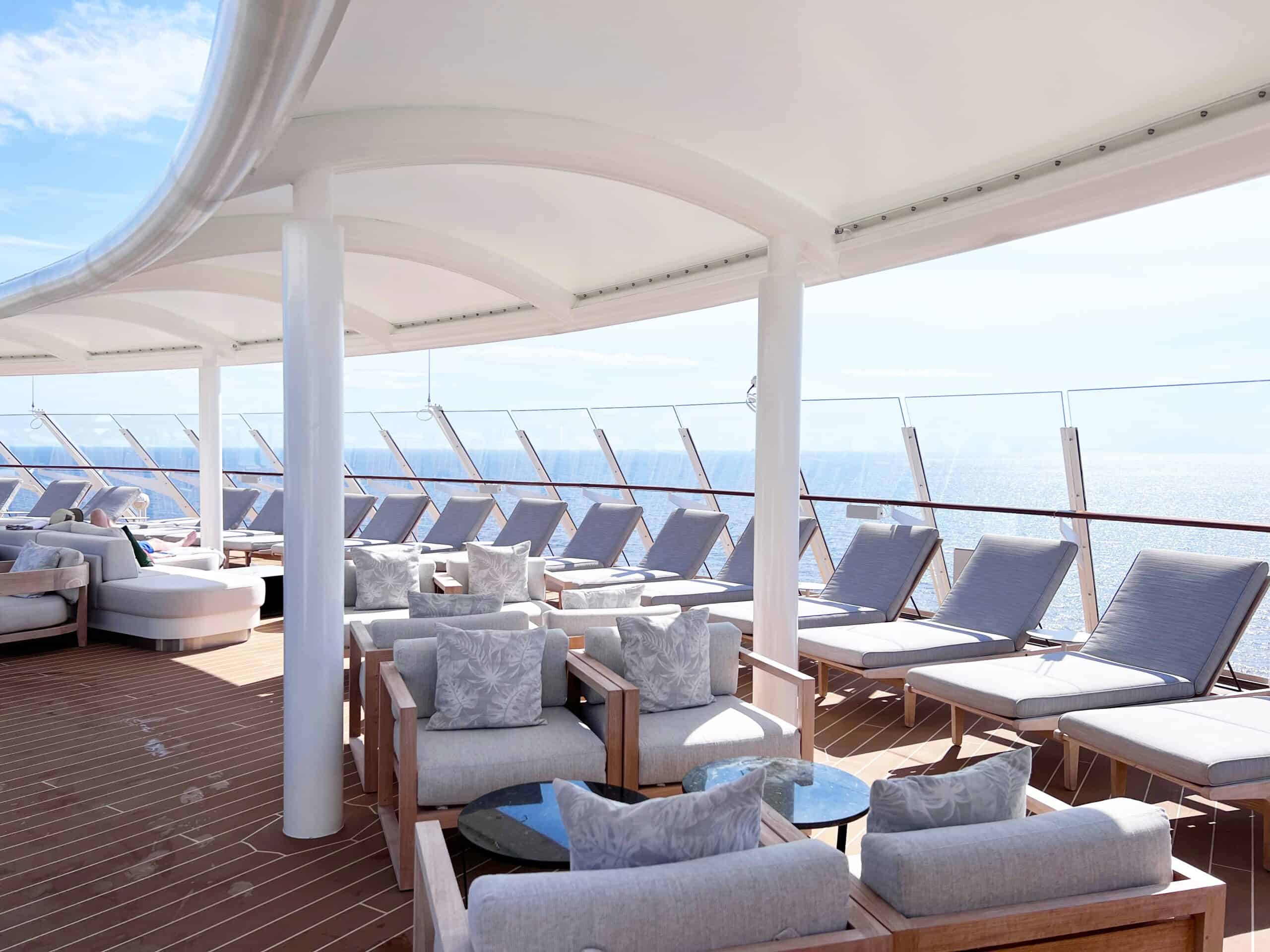
Deck time and pool time. The family pool areas are open to all ages, with sections suited to very small kids: sun, water, deck chairs, general vacation energy, all accessible.
The beach at Castaway Cay. Babies and toddlers on the beach at Castaway Cay is one of the more universally recommended parts of a Disney cruise with a young child. Soft sand, calm water, and Scuttle’s Cove offers a contained splash area for little kids.
Shows and entertainment. The main stage shows are fine to bring a baby or young toddler to. If they get loud or restless you can step out, but the theaters are designed to accommodate families, and a sleeping baby in your lap through an entire show is a common report from parents of infants on board.
What They Cannot Do Yet
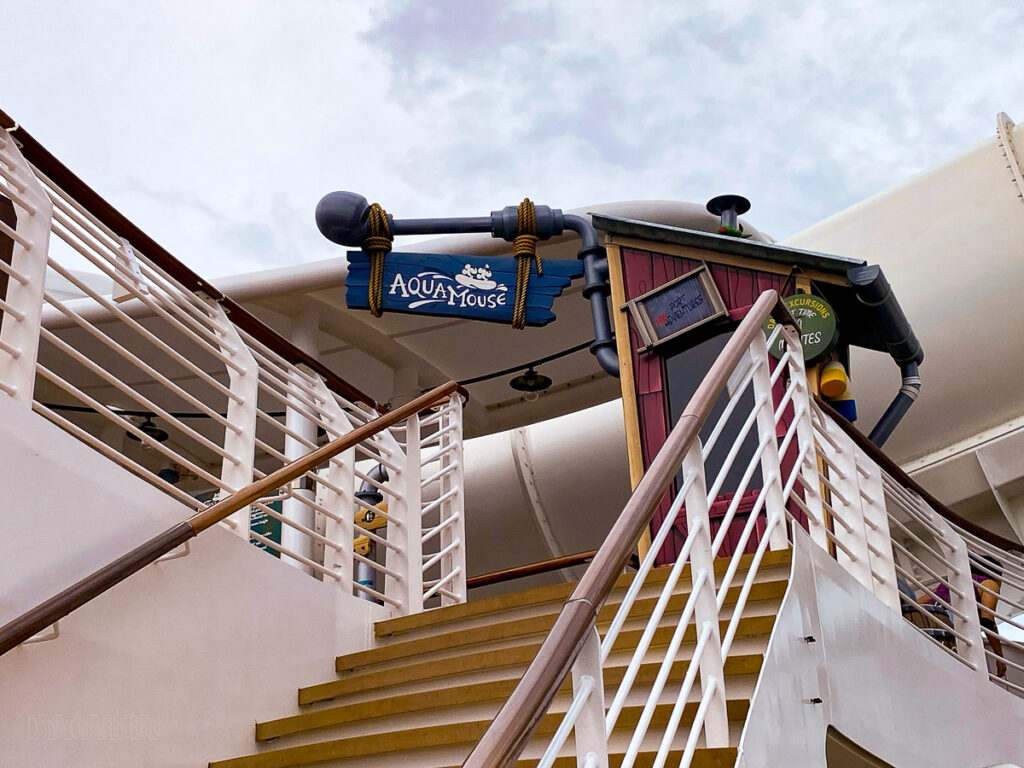
AquaDuck and AquaMouse. The water coaster rides have a minimum height requirement of 42 inches, and any rider under 7 must ride alongside someone at least 54 inches tall. A baby or young toddler will not meet either bar. This is not a Disney cruise problem, it is just physics: these attractions are more fun once a child is old enough to remember riding them anyway.
Bibbidi Bobbidi Boutique. Minimum age is 3. Under-2 siblings are welcome to observe from outside while an older sibling gets a makeover.
Oceaneer Club and Oceaneer Lab. The kids’ clubs for the older set start at age 3. The nursery, as mentioned above, covers the under-3 crowd.
Some shore excursions. Many DCL port adventures have minimum age or weight requirements. If excursions matter to you on a sailing with port stops beyond Castaway Cay, check the specific age requirements when you book.
Sleep Setup in the Stateroom
Disney Cruise Line can provide a pack-and-play or mini crib in your stateroom at no extra charge. Request it when you book, or as early as possible through your reservation; do not assume one will be there automatically. If you prefer to bring your own, a lightweight travel play yard takes up less room in the stateroom than the ship’s standard model.
Staterooms on the larger ships are not spacious, but they are laid out efficiently enough that a pack-and-play in the corner does not require rearranging furniture.
The stateroom curtains are true blackout curtains, which parents consistently point to as one of the more useful, underrated features for a midday nap. A fully dark cabin with a white noise machine running is a setup that reliably outperforms most hotel rooms for daytime sleep with a baby.
If your baby is still night-waking, being in the same room is functionally the same situation as home: you are right there. Many parents report their baby actually sleeping better on the ship than expected, likely because full days on board leave a toddler more tired by bedtime.
Feeding Onboard
Nursing. If you are breastfeeding, you can nurse anywhere on the ship. Guest services and family areas are all accommodating, and this is not something parents report running into pushback over on a Disney ship.
Formula and bottle feeding. Room service can bring hot water at any hour, and dining venues can warm bottles as well. Pack more formula than you think you need for the sailing, planning for the trip length plus a couple of extra days in case of any delay. Check our packing list for toddlers for the full rundown on what to bring.
Starting solids and purees. The buffet at Cabanas has soft foods, fruits, and mashed options that work for babies eating real food. The main dining rooms can accommodate a lot if you ask; the kitchen teams are experienced with young kids and dietary restrictions.
Snacks from home. Sealed, packaged snacks from home are fine to bring on the ship. Bringing a toddler’s current preferred snack is worth doing since you cannot always predict whether the ship will have it in the exact form your kid will accept.
Allergen note. If your baby has any known food allergies, note them in your reservation and inform your dining room server on the first night. DCL takes allergies seriously and will accommodate, but the kitchen needs advance notice to do it well.
Should You Wait Until They Are Older?
This is the question parents ask most often when a family sails with a child under 2. The subtext is usually: won’t they just not remember it anyway?
The honest answer: no, they will not remember it, and that is true of any trip taken before a child is roughly 3 to 4 years old. What parents who have done it point to instead is what it gives the adults: photos, a specific memory of a nap on a shoulder during a theater show, and a trip logged during a window when a child is delighted by simple things.
The other practical point that holds up: sailing under 3, potentially at no additional cruise fare, is an efficient use of a Disney cruise from a cost standpoint. Babies and young toddlers are portable, they nap reliably on a schedule you control, and they have not yet developed opinions about which character meets they need to do or why they cannot have another ice cream. Those constraints come later.
If you have a baby and want to go, there is no strong reason grounded in the ship’s offerings to wait. The nursery, the splash pads, the blackout curtains, and Castaway Cay’s calm-water beach are all built to work for exactly this age.