
Some links in this article are affiliate links. As an Amazon Associate, Knots & Naps earns from qualifying purchases, at no extra cost to you. This never changes what we recommend. How this site works.
There is a version of this scene in almost every Castaway Cay trip report from parents of toddlers: it is 12:40pm, the family is halfway down the long beach path back to the ship, and the two-year-old is slumped sideways in the stroller, unconscious, sometimes still holding a piece of watermelon from lunch. The nap window opened at 12:30. The beach did not care.
That is the whole nap schedule problem on a Disney cruise, compressed into one scene: there is always something happening, and nap time does not care.
Here is how families who cruise with toddlers actually handle it.
Yes, the Stateroom Curtains Actually Block the Light
The first question nap-protective parents ask is some version of: “Is there any way to make the stateroom dark enough for naps?” The answer is yes, fully.
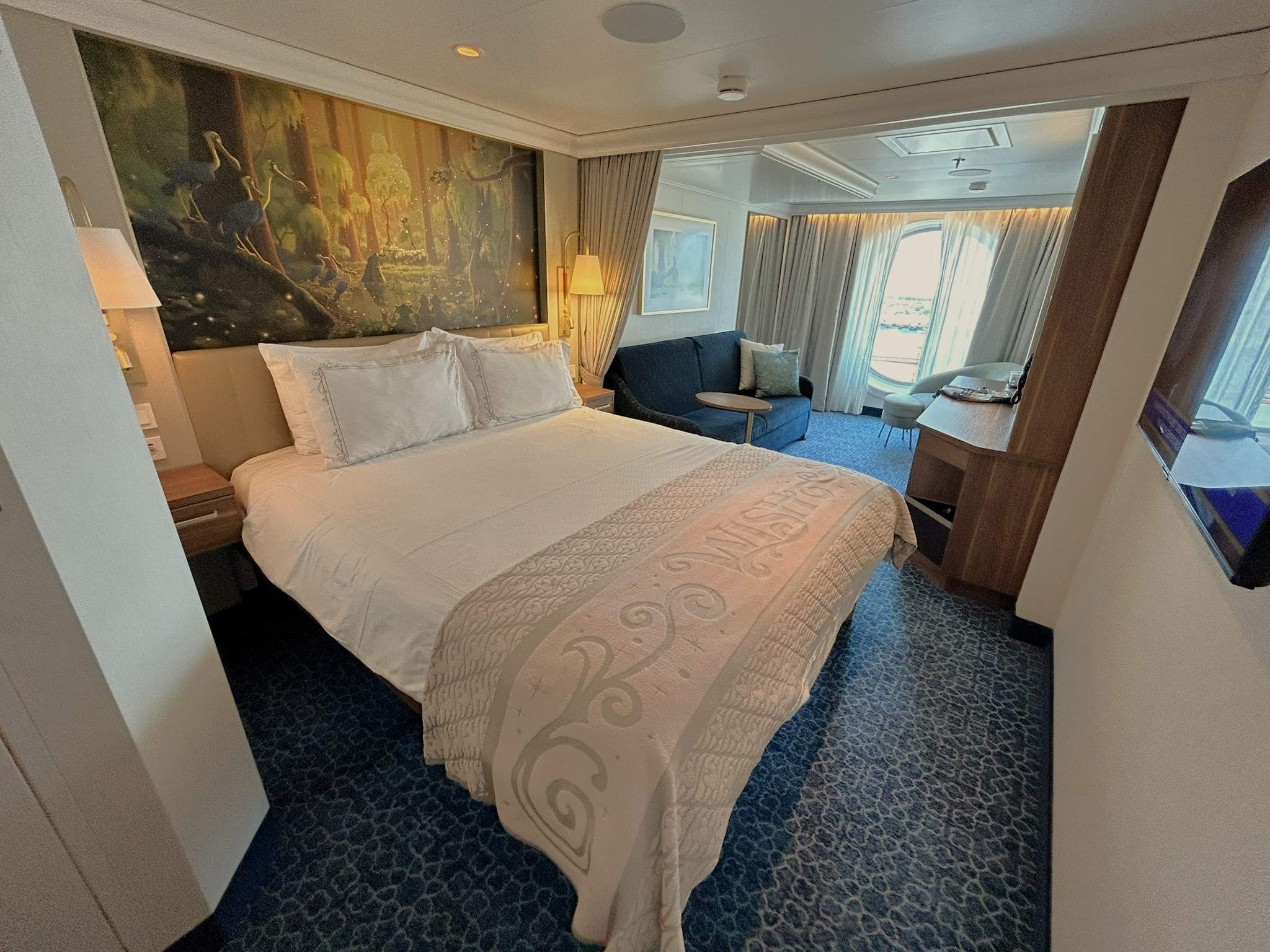
The blackout curtains on Disney ships, both the Fantasy and the Wish, do their job. This is not like hotel blackout curtains that let in a seam of light around every edge. The Disney stateroom curtains cover the verandah door and the window completely. At 1pm on a sunny day, with those curtains closed, the room is dark. Not dim. Dark. (For hotels between cruises, portable blackout curtains with suction cups solve the same problem on land.)
The other two pieces of the nap kit: a small travel white noise machine and a night light. The sound machine handles hallway noise, neighboring verandah conversations, and whatever announcements come over the ship’s PA. The night light is for middle-of-the-night moments when someone wakes up disoriented and nobody wants to flood the room with light.
The stateroom is a really good nap environment once you set it up. Parents who arrive skeptical tend not to stay skeptical.
You Can Go Back Midday Without Losing the Day
The mental block for most parents is the idea that going back to the stateroom for nap means giving up the afternoon entirely. That is not how it works out in practice.
Here is what the midday break looks like for families who commit to it: wrap up the pool or beach around 12:30 or 1pm, walk back, get the kids down, and the adults get roughly 90 minutes. On the verandah. Eating food while it is still warm. Having a conversation that does not involve narrating reality to a two-year-old.
Then nap ends, kids are reset, and the whole rest of the afternoon is still there before dinner. For the midday meal itself, room service is the easiest way to get fed without leaving the stateroom while the kids sleep.
The alternative is well documented. Skip the nap to maximize port or pool time and, by 4pm, one kid is in emotional freefall over a juice box opening wrong and the other is demanding to be carried. The nap is not the thing that steals the day. Skipping the nap is the thing that steals the day.
How to Time Nap Around Main Seating Dinner (5:45pm)
Disney cruise rotational dining runs two seatings. Main seating is at 5:45pm. Late seating is at 8pm. If you have toddlers, you almost certainly want main seating, and 5:45pm is earlier than it sounds.
The math that works: nap starts no later than 1pm, ends no later than 3pm. That leaves two full hours before heading toward the dining room, which is enough for getting cleaned up, getting kids into dinner clothes, and absorbing the inevitable chaos of that transition.
A nap that ends at 3:30 is fine but tight. A nap that runs to 4 or later makes dinner harder, because many toddlers wake up from a long nap grumpy and need 30 to 45 minutes before they are functional humans again. If that describes your kid at home, it will describe your kid at sea.
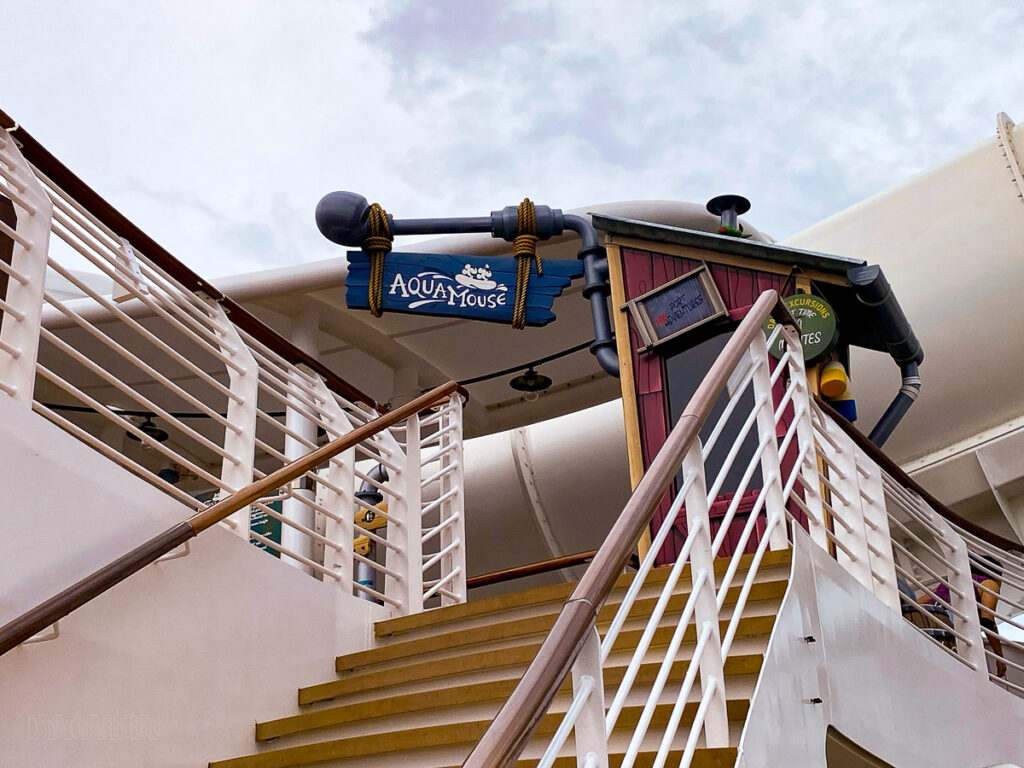
One practical framing that helps: do the big activities before lunch. Character meets, AquaDuck rides, morning beach time all happen in the morning hours. After lunch, the plan is to head back. That framing makes the midday return feel like the plan rather than a concession.
What to Do When Nap Falls During a Port Stop
Port days are the hardest. Castaway Cay in particular has a cruel scheduling reality: the ship arrives in the morning, and the best nap window lines up exactly with peak beach hours.
The three approaches that show up consistently in trip reports:
Option 1: Get off the ship early and plan to be back by 12:30. This is the default for schedule-committed families. First or second group off the ship, beach first, Scuttle’s Cove for the kids, early lunch at Cookie’s BBQ, back on board for nap by 12:30 or 1. That captures almost the full Castaway Cay morning and still hits nap on time. It works if you actually commit to the early departure.
Option 2: Do a late arrival at the port. Some parents run nap on the ship first, then head off around 2pm. You lose the best beach hours but skip the scramble. This is the right call on days when a kid was up early and is visibly trending toward disaster.
Option 3: Let the stroller nap count. The watermelon nap from the opening of this piece is not ideal, but it is something. When the timing is just not going to work, a 45-minute stroller nap on the walk back gives everyone enough of a reset to get through dinner. Not the first choice. Better than nothing.
Skipping the nap entirely on a port day has its defenders (“kids do fine without it on vacation”), but the parents posting about 5pm meltdowns outside the dining room tell the other side of that story.
Practical Tips for Keeping the Schedule Without Making Everyone Miserable
Build the nap into the daily plan from the start. Open the Navigator app each morning and sort the day’s activities into before-nap and after-nap. The schedule gets built around the nap, not the other way around. Our daily schedule guide for toddlers on a Disney cruise shows the full structure.
Tell the kids where they are going before the walk back starts. Toddlers protest the stateroom return less when it comes with a preview: rest first, pool after. The framing matters. Three-year-olds are already negotiators.
Use the stateroom in shifts if only one kid is napping. Many kids drop the full nap around age three. The standard solution: the non-napper gets a tablet and volume-limiting kids’ headphones for quiet time while the younger one sleeps, and the adults sit on the verandah. Not perfect. Works.
Do not start anything ambitious in the hour before nap. No long pool lines, no character meets with an unknown wait. The pre-nap window is for winding down, getting fed, and walking back. Ambitious things go first thing in the morning or after nap.
Give yourself a cushion before dinner. Main seating at 5:45 means stateroom-ready by 5:15. Nap done, snack maybe, kids in dinner clothes, and five minutes for the adults to put on something other than a swimsuit. A late nap eats that cushion fast.
The goal is not a perfect schedule. The goal is enough of a schedule that nobody falls apart before the Mickey bars come out. Families who protect the 1-to-3 window mostly hit that goal, watermelon naps notwithstanding.